Showing posts with label Fiqh. Show all posts

Tuesday, April 05, 2011

Lawful or Unlawful?

The Lawfulness of Muslim Revolutions
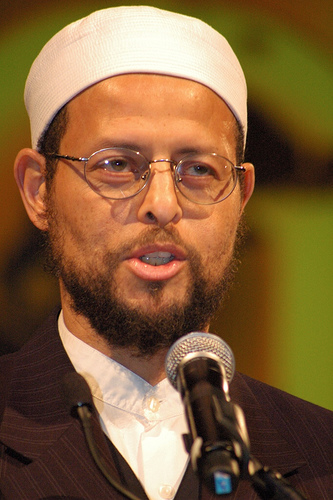
By Imam Zaid Shakir

As protests and defiance spread in Muslim countries, questions are being asked as to whether such conduct is halal.

As revolutions and uprisings sweep the Middle East and North Africa, most Muslims everywhere are energised by a wave of hopeful change in a region that has suffered far too long under the stultifying rule of “presidents for life.” However, some Muslims are more hesitant, and view the protests as unsanctioned rebellions against legitimate rulers.
To begin to analyse the current situation, each of the movements in the various affected countries would have to be assessed on a case-by-case basis. Conditions in each country are unique, and therefore any blanket statement would be inaccurate and irresponsible. What follows are some considerations that would have to be part of any meaningful discussion of the Islamic legitimacy of the various movements that can potentially reshape the political map of the Middle East.
Firstly, we have to bear in mind that classical treatises and writings dealing with Muslim political theory will not give us the entire answer to the question of the Islamic legitimacy of the ongoing uprisings in the Muslim world. This is because those writings occurred in a socio-political environment that differs from the current one. Especially significant is the advent of the modern nation-state, and its associated concepts of state sovereignty, legitimacy, allegiance, citizenship, the social contract and the national interest. Each of these concepts, in the modern setting, differs from its pre-modern conceptual counterpart, or was unknown at the time. Hence, the writings of pre-modern Muslim scholars, no matter how brilliant, cannot give us full insight into the social, political and cultural issues that Muslims are currently dealing with.
Secondly, the nature of the neo-colonial arrangements that prevail in many Muslim nation-states, where a “comprador bourgeoisie” “manages” the indigenous masses on behalf of a foreign power renders the entire question of the legitimacy of the state a controversial point. In other words, if the state is merely a front for foreign control, and the policies it pursues are oriented to serve the interests of a foreign elite first and foremost, it is meaningless to discuss the allegiance people owe to the state without asking a deeper question. Namely, if in reality allegiance to the state is a sort of de facto allegiance to a foreign non-Muslim power, how can questions of allegiance to the state have any definitive meaning or relevance from an Islamic perspective?
A third issue of significance is the hegemonic nature of the modern state and its ability to exert control over the lives of its citizens in ways that were inconceivable at the time medieval Muslim political theorists were writing. Generally speaking, the modern state controls the economic life chances of its citizens; it defines the parameters of political participation; it controls the scope and nature of education; it can intrude almost at will into the private lives of its citizens; it can determine the conditions of mass incarceration (ie. the Japanese Internment Act, or the current Drug War in the USA) and, if it chooses, it can tyrannise the citizenry with impunity as, by definition, the state monopolises the legitimate use of force in the society it presides over.
The upshot of the preceding passage is that the expanded reach of the modern Muslim state demands an expanded basis for defining allegiance and legitimacy. In earlier times, when the lack of information and security technology limited the scope of state power, it was natural to limit the scope of state legitimacy to questions revolving around primarily religious issues. However, the deepened reach of the state demands that examination of legitimacy and allegiance begin considering questions such as economic security, political participation, and basic human dignity along with related matters. If these issues are motivating Muslims who are challenging the legitimacy and efficacy of their states, they have to be considered by the religious scholars and authorities who are assessing the appropriateness of those challenges.
When we do consider existing Muslim writing on these issues, there are caveats that normally escape discussion. Let us consider, for example, the issue of the legitimacy of revolt against an established “Muslim” ruler. There are those who claim that any rebellion against a Muslim ruler is unsanctioned. However, we do not find this opinion in the writings of the traditional scholars. This opinion is close to the conservative Sunni view. However, even the Sunni view is conditional, and rebellion is sanctioned in the case of the ruler openly rejecting Islam or sanctioning laws or practices that violate accepted Islamic laws or principles, and it is not feared that a greater tribulation will befall the believers should they rise up.
This Sunni position, which gives priority to stability over justice, evolved over time and is informed by well-known historical realities. However, it is not universally accepted among the Muslims. The Shi’a and the Mu’tazila both hold that a rebellion in the pursuit of justice is lawful, and even encouraged in some instances. This is particularly the case when the injustices being challenged are clearly unsanctioned by the laws or principles of Islam. Hence, the scholarly consensus needed to declare the current protests as absolutely forbidden is lacking.
Similarly, a simplistic application of the verse, “If two parties of the believers fight each other make peace between them…” (49:9), to challenge the protests would be difficult in places like Egypt, because two parties amongst the believers were not fighting each other. The protesters were non-violent in their actions and intent. Any violence was initiated by the supporters of the government, or the state security forces, while during the periods the protesters resorted to violence it was clearly in self-defence. As soon as the violence against them abated, they returned to their non-violent ways. Their peaceful protest was guaranteed by Article 54 of the Egyptian constitution, while Article 57 clearly condemned as unconstitutional the violence the pro-Mubarak goons were employing against them. Hence, to declare their movement as illegitimate would be difficult from either an Islamic or a constitutional basis.
This brings up a related point. In that the protesters were speaking out against the excesses of tyrannical, authoritarian powers, they are engaging in the best Jihad. The blessed Prophet mentioned, “The best Jihad is a just word in the face of a tyrannical ruler.” In light of this hadith, what Islamic argument can validly be made to deny the people their right to speak out against the tyranny of their rulers?
Others argue that these rebellions are sowing the seeds of instability in the region. It should be borne in mind that the seeds of instability are sown by the governments themselves and the rapacious elites and foreign powers that benefit from their rule. The political repression of the people and their economic exploitation is the source of any instability, not the action of those protesting against the abuses. The protesters are themselves the fruit of the seeds sown by the ruling elites. Hence, any efforts to identify the source of any instability must go to the source of that instability and not focus on its effects.
Finally, we can add that as Muslims we should not see ourselves as being eternally trapped in a world where we are the helpless objects of the actions of others who have constructed institutions that are antithetical to our values and interests. The nation-state system in the Muslim world is less than one hundred years old. As an institution, it has debatable legitimacy and authenticity according to Muslim political thought. The way its socio-political role in Muslim societies has evolved has been shaped by un-Islamic realities such as colonisation and the Cold War, and by un-Islamic institutions such as the International Monetary Fund, the World Bank and now the World Trade Organisation. To declare this arrangement beyond question, criticism or challenge is not only unjust, it is a betrayal of Muslim history.
This is an issue that requires an analysis beyond the limited space available here. We pray that God blesses the people of Tunisia, Egypt, Libya, Yemen and elsewhere to fulfil their aspirations to enjoy a dignified existence in lands where the nobility and honour conferred upon them by God is celebrated and cherished.

Friday, September 10, 2010

Amalan Sunat Hari Raya: Fatawa al-Hindiyyah

Selamat Hari Raya Eidul Fitr!

Semoga Allah menerima semua amal kita yang ditunaikan pada bulan Ramadan yang baru berlalu.
Hari Raya pertama, jangan lupa ke masjid untuk solat Subuh dan solat sunat Eidul Fitr.
Di bawah ini ialah petikan dari blog www.daralhadith.org.co berkenaan amalan-amalan sunat yang digalakkan pada hari raya. Fatawa ini dikumpulkan oleh ulama-ulama mazhab Hanafi di India pada zaman pemerintahan Maharaja Moghul Aurangzeb.

The authors of the ‘Fatawa al-Hindiyyah’ (1/165) in “Chapter 17 – Regarding The Two Eid Prayers” outline some of the desirable acts for the day of Eid as the following:
“It is desirable (mustahab) on the day of Fitr for a person to bathe, use a toothstick and wear their best clothing as mentioned in ‘al-Quniyah’, whether they are new or (K:old clothes which) have been washed as mentioned in ‘Muhit al-Sarakhsi’.
It is desirable to wear a ring and apply perfume, tabkir - which is to wake early, ibtikar -which is to hasten to the prayer area (مصلى), to give charity (sadaqat ul-fitr) before the prayer, to offer the morning prayer in the masjid of ones area, going out to the prayer place (مصلى) walking and to return via another route as mentioned in ‘al-Quniyah’.
There is no harm in riding to the Friday (Jumah) prayer and the two Eid prayers, however walking is superior in relation to the one who is able to do so as mentioned in ‘al-Zahiriyah’.
It is desirable in the Eid al-Fitr to eat before going out to the prayer place (مصلى) three, five or seven dates more or less as long as they are an odd number, and if they are not available then that any sweet thing that he wishes as mentioned in ‘al-Ayni Sharh al-Kanz’.
If he does not eat before the prayer he is not sinful and if he does not eat after it all the way to Isha, then perhaps he will be sinful[1] for this. Al-Adha is like al-Fitr in these matters except that he refrains from eating until he offers the Eid prayer as mentioned in ‘al-Quniyah’.
And in ‘al-Kubra’ it is mentioned that: Is eating before the prayer on the day of Adha disliked (makruh)? There are two narrations regarding it. The chosen one is that it is not disliked however it is desirable that he does not do so…
Going out to the Eidgah for the Eid prayer is recommended (sunnah) even if the Jami Masjid can accomodate them all, upon this are the generality of the scholars. This is the correct view as mentioned in ‘al-Mudmirat’
A person should go out walking to the prayer area with tranquillity and reverence, lowering their gaze from all that should not be seen as mentioned in ‘al-Mudmirat’.
To recite the Takbir loudly on route in the al-Adha and to halt it when he reaches the prayer place, and this is the view which has been adopted.Iin al-Fitr the chosen view of the madhab is that he does not recite loudly and this is the adopted opinion as mentioned in ‘al-Ghiyathiyyah’, as for reciting silently then it is desirable as mentioned in ‘al-Jawharah al-Nayyirah’.
Issue 7: Optional (nafl) before the Eid prayer is absolutely disliked whether it be in the Eidgah or at home, whether the Eid prayer is compulsory on them or not, to the point that if a woman wishes to offer the Chasht prayer at home she should pray after the Eid prayer has been offered. To offer optional prayers after the Eid prayer is disliked in the Eidgah, however, he may offer them at home rather it is desirable that he offers four rakahs. These rulings are related to the elite (khawas) if the common people (awam) offer nafl before the Eid prayer even in the Eidgah they will not be forbidden. (Dur al-Mukhtar, Rad al-Muhtar 1/777,779)
Addendum: [Regarding the rulings related to optional (nafl) prayers on the day of Eid]
Mawlana Amjid Ali al-Azami details the following in his Hanafi Fiqh compendium ‘Bahar al-Shariah’ volume 4:
Issue 7: Optional (nafl) before the Eid prayer is absolutely disliked whether it be in theE idgah or at home, whether the Eid prayer is compulsory on them or not, to the point that if a woman wishes to offer the Chasht prayer at home she should pray after the Eidprayer has been offered. To offer optional prayers after the Eid prayer is disliked in the Eidgah, however, he may offer them at home rather it is desirable that he offers four rakahs. These rulings are related to the elite (khawas) if the common people (awam) offer nafl before the Eid prayer even in the Eidgah they will not be forbidden. (Dur al-Mukhtar, Rad al-Muhtar 1/777,779)

[1] Al-Azami in his ‘Bahar al-Shariah’ uses the term عتاب meaning the person would be reproached or deserving of blame, whilst the edition of the ‘Fatawa al-Hindiyyah’ referred to uses the term عقاب which has been translated above. As is evident both words have a similar spelling in Arabic which is open to the possibility of being misread by scribes or typists and thus leading to a difference of meaning, and Allah (Most High) knows best.

Friday, May 14, 2010


Edited Transcript of Interview
Interviewer: …Are they an accurate, pure, and untainted representation of Sufis and tassawuf?
Shaykh Bouti: As far as previous generations are concerned, it’s not possible for me to pass judgment on them because I did not live in those times. However, I have read biographies of people such as Shaykh Abdul Qadir al-Jilani, Shaykh Raslan al-Dimashqi, and Shaykh Ahmad al-Rifa`i. I swear by Allah, these people embodied prophethood, except that they did not receive divine revelation.
Interviewer: They embodied prophethood?
Sh. Bouti: Prophethood, minus divine revelation. In other words, if they had revelation, they would have been prophets. What I mean by that is that they represented, in their character, in their self-discipline, in their inner development, the life of God’s Messenger (peace be upon him). However, since divine revelation was not present in their case, [obviously] they were not prophets or messengers.
And for such people – the foundation of their journey to Allah was the two wings of the Divine Book and the Sunnah [Prophetic tradition], and nothing more. Abdul Qadir al-Jilani – may Allah sanctify his soul – when death drew close to him, his son, whose name was also Musa like your name, was sitting next to him. He gave him his parting advice. Among what he said to him was, “My son, fly to the Truth with the two wings of the Book and the Sunnah.” And he warned him from bid`ah [innovation].
So I don’t want to speak about such people [who came before us]. If I want to look for strict adherence to the proper methodology, it is in their lives that I will find such an adherence. If I want to look for opposition to bid`ah, it is in their lives that I will find opposition to bid’ah.
However, if you’re asking me about the tariqas of this age, I request that you show me a single tariqa from among them whose murshid [spiritual leader and advisor] possesses knowledge of Islamic law that is proficient and sufficient, who is aloof from this world and everything that it contains and is attached to it, and who possesses uprightness in his character. [If such a person were found] I will go tomorrow to become his murid [student]. But I have looked everywhere, and have not found such a murshid.
Interviewer: What is the reason for this, respected shaykh?
Sh. Bouti: Well, I don’t know. The nafs [lower self] is as it always has been – and I don’t absolve my own nafs from this – “Verily the nafs is ever commanding of evil.” The whole business of being a murshid is a dangerous business. It’s a slippery road. The murshid, when he tastes the pleasure of leading others, the pleasure of having a following… it’s something that is almost intoxicating. When he sees people kissing his hand day and night, and some almost willing to kiss his knees and his feet [out of awe and respect]…. when he sees things like this, he begins to believe and imagine that he has become someone great. And the nafs is a constant presence. If such a person has not spent long periods of time in self-reproach, reminding himself that he is nothing, and that he has done so many bad deeds etc, he will not be able to withstand these pressures.
Furthermore, when [this murshid] finds his murids bringing gifts for him, giving him money… Even if I didn’t have an appetite for wealth when it was first given to me, I begin to develop one. I begin to desire wealth. I begin to desire position. I begin to desire humility and deference from people because I am such an important and great human being. All of this is fitnah [trial and tribulation] for me… a fitnah… a fitnah.
And the person who does not fulfill the essential requirements for being a murshid, yet somehow becomes a murshid – this responsibility is dangerous for him, and dangerous for his murids.
Just to make what I’m saying clearer for you, my brother, let me present to you the opposite picture. Let us turn to the age of Shaykh Ahmad al-Rifa`i, may Allah sanctify his soul. Now that is an amazing man. He always used to say in his gatherings, in front of his murids, something that he would repeat again and again – that he was not a shaykh, and not a murshid, and warned against people looking at him in that light. He said in one of his gatherings – and this can be found in his book al-Burhan al-Muayyid – “May I be resurrected with Fir’aun and Hamman if I consider myself better than any one from among you.”
“I am not a shaykh. I am not a shaykh. My name is Little Ahmad, The Nothing. Or better yet, Nothing, The Nothing [a play on his name which literally means ‘the praised one, the high’]” – this is what (Sh. Ahmad ar-Rifa’i) used to say.
And he used to say, “The murshids whom Allah favors with karamaat [special abilities or occurrences] conceal them, just as a woman [naturally] conceals her menstruation from others.”
Compare between this and what we see from murshids of our times. Some of them extend their hands for people to kiss, to teach them [the practice of] kissing hands, and if one of them doesn’t kiss their hands they consider him negligent in his duties.
Interviewer: But is there something wrong with kissing the hand out of respect? There are many people who would even wish to kiss your hand, but you absolutely refuse?
Sh. Bouti: Yes… yes. Why do I refuse my dear brother?
Sh. Bouti [close to tears]: I swear by Allah, the One besides whom there is no other god, I feel embarrassed before Allah when someone from among the people kisses my hand. Because I know myself, and my Lord is One who conceals and veils the mistakes of His servants. He conceals so much… He conceals. I know my shortcomings. I know how much I’ve fallen short in my relationship with my Lord. Yet, He makes it so that the people only see the positive side of me, and He hides the rest from the eyes of people and keeps it something hidden between us.
So if some innocent person comes to me, who only sees my outer state and doesn’t know my inner state… it’s true that he doesn’t know, but doesn’t Allah know? How can I say to him, “Go ahead, kiss my hand, it’s ok, so that you may learn proper etiquette,” while Allah azza wajal [Mighty and Majestic] is watching me and saying, ‘Haven’t you done this? Haven’t you done that? Aren’t you the one who sees such and such [bad qualities] in your self?” This is what prevents me from allowing people to kiss my hand.

Thursday, November 19, 2009

Ahli-Ahli PAS sila baca

'Bai'ah' according to Islamic jurisprudence

Hashim Kamali


THE current debate over oath-taking and its combination with divorce and pledge of political allegiance (bai'ah) has caused concern among Muslims to know Islam's own viewpoint on the issue.

The facts remain unclear but continued media coverage of the "oath of loyalty" linked to Pas representatives to divorce their wives (talak tiga) if they jump or quit the party has invoked public disapproval of this manner of oath-taking and its negative impact on the sanctity of marriage.

This is also a reliable indicator of Islam's outlook on this matter and may well provide the basis for a juridical consensus of our learned scholars to proscribe and denounce the oath-taking at issue.

Taking an oath proper (yamin) is permitted, according to the directive of a hadith, but in the name only of God and His revealed speech, the Quran.

Muslims are also cautioned not to debase God's illustrious name in frivolous oath-taking (Q.2:224). An oath may thus be taken for a valid reason, to show earnestness to observe or avoid a certain conduct in the future, or ascertain the truth of a past event, such as of witnesses before a court.

Oath-taking to divorce one's wife is basically ultra vires, but the jurists admitted it as a form of oath due to its continued practice among Muslims of a pre-Islamic usage that survived the advent of Islam. Muslim jurists consider this, not as yamin proper, but something of compromised validity they named as half.

Yet it became moot whether taking an oath on a contingent divorce was an oath proper, or a suspended divorce (talaq ta'liq). Since the oath in question is not in God's name, it is oath in a figurative sense (majazi) only. Muslim jurists have, however, disagreed over the juridical consequences of such an oath.

The four Sunni schools of Islamic jurisprudence have held that a suspended divorce takes place when its condition materialises, regardless as to whether it was taken by way of an oath, or a suspended divorce for its own sake. This conclusion is based on a hadith simply declaring that "Muslims are bound by their stipulations". A suspended divorce consequently occurs as pronounced in the first place.


The Zahiri and Shia schools have held that a suspended divorce, be it in the form of an oath or otherwise, does not occur ab initio, due mainly to the existence of doubt over its underlying intent: did he actually mean to divorce his wife or merely to show earnestness in respect of another purpose?

Ibn Taymiyyah (d.1328 CE) and his disciple, Ibn Qayyim al-Jawziyyah, have held that if the suspended divorce was taken by way of an oath only, even when its contingent event materialises, divorce does not occur, but the oath-taker is liable to an expiation (kaffarah) that consists of giving charity or fasting. Ibn Qayyim agrees but holds that no expiation is required.

However, if the suspended divorce is pronounced for its own sake, not combining with an oath, then it does take place whenever its contingent event materialises.

The hadith which declares that "divorce is the worst of all permissible things in the eyes of God" implies that all divorce is reprehensible (makruh).

A suspended divorce, when intended, is worse in the sense that it puts the marriage, which the Quran characterises as a solemn covenant (mithaqan ghaliz) in a state of insecurity and suspense (Q.4:21).

Although essentially a civilian contract concluded between two willing parties, marriage in Islam has a devotional (ta'abbudi) aspect that sets it apart from other contracts.

There is disagreement between the Hanafi and Syafii schools over the interpretation of a Quranic verse authorising women who attain intellectual maturity (rushd) to manage their own property transactions (Q:4:6).


The Hanafis drew the conclusion that if an adult woman is authorised to conclude financial contracts, she can, by analogy, also contract herself into marriage without the intervention of a guardian (wali).

The Syafii's retort that marriage is not like other financial contracts as it involves family relations, hence the analogy at issue is discrepant (qiyas ma'al-fariq), which is void, and the presence of wali is a requirement of marriage even of adult women.

These interpretations remain unresolved to this day. A message one can draw from this may be that marriage and divorce should not be mixed up with other transactions, including party-political matters.

A bai'ah fortified by a suspended divorce is also unprecedented in that it consists of an unconditional pledge of loyalty, which the early Muslims took to support the Prophet in the propagation of Islam and counted as an act of merit (Q.48:10).

The Prophet also took bai'ah from women, as the Quran recounts that "they avoid shirk (associating other deities with God), committing theft, adultery, infanticide, slander..." (Q:60:12).

Following the spread of Islam in Arabia and beyond, bai'ah lost its theological application and took a predominantly political character.

In the constitutional theory of caliphate that Muslim jurists subsequently formulated, bai'ah became a requirement of valid election to the caliphal office.

This was not conditional, however, nor has there been any bai'ah in our history to combine with a suspended divorce. A bai'ah in our times is the rough equivalent of a vote. Just as a vote is unconditional, so is the bai'ah.

A vote in a parliamentary or presidential election cannot take a condition to say, for instance, that "I vote for you provided that you do such and such". A condition of this kind would render the election inconclusive. This can also be said of bai'ah.

The alleged bai'ah-cum-suspended divorce that the media has reported of Pas representatives is unprecedented and amounts to a bid'ah (pernicious innovation), which calls for renunciation and avoidance.

The writer is founding chairman and CEO of the International Institute of Advanced Islamic Studies Malaysia.