Sunday, December 31, 2006

Eid Mubarak!!

Three Final Year Lads with Without-A-Year Chap

Friends Along South Circular Road After Prayer in Dublin Mosque


Tahun ni, saya bersolat sunat 'Idul Adha di Dublin Mosque.Di kalangan masyarakat Melayu, sambutan Raya Haji sangat kurang meriah jika dibandingkan dengan 'Idhul Fitr.Di Dublin juga, sambutan Raya Haji baik di kalangan masyarakat Melayu atau Muslim bukan Melayu tidaklah semeriah Raya Puasa.Guru BM saya di Kolej MARA Banting pernah memberikan alasan,

" 'Idhul Fitr lagi seronok untuk disambut, sebab gembira posa dah habis!!"

Walau bagaimanapun, hakikat sebenar adalah jauh berbeza.Tingkatan sambutan Raya Haji sebenarnya lebih tinggi jika dinilai dari neraca syara'.Pada Hari Raya Puasa kita cuma disunnahkan untuk memperbanyakkan takbir, tahlil dan tahmid selama sehari sahaja.Namun, untuk perayaan Raya Haji kita disunnahkan untuk melakukannya selama 4 hari termasuk pada hari-hari Tasyri'.Di tanahair, sambutan Raya Haji lebih meriah di negeri-negeri Pantai Timur tetapi dianggap sedikit enteng di negeri-negeri Pantai Barat.

Senario berbeza dapat disaksikan di negara-negara Arab, mungkin kerana lokasinya agak hampir dengan Makkah dan Madinah.Aura kemeriahan suasana haji mempengaruhi gelombang sambutan di sana.Suasana sambutan Raya Haji jauh lebih meriah.Pada saat-saat begini tiba-tiba saya teringatkan kenangan manis menziarahi dua Tanah Suci pada musim panas yang lepas. Terasa sedikit kehilangan dan terkilan kerana tidak dapat menghabiskan lebih banyak masa di sana.Ditambah pula dengan beberapa kenangan pahit melihat nasib beberapa tempat bersejarah yang telah dimusnahkan secara sistematik dan beransur-ansur oleh Dinasti Saudi.Mungkin itulah sebab saya masih belum pernah memperkatakan tentang pengalaman saya di sana.

Apapun, marilah kita mengubah budaya kita dalam menghayati falsafah haji dan prinsip pengorbanan yang tersembunyi dalam kisah Nabi Ibrahim dan anakandanya Ismail.Antara huraian mengenai falsafah haji yang paling saya minati ialah buku karangan pemikir Islam terkemuka dari Iran, Dr Ali Shariati.Anda boleh menghadam tulisan-tulisan beliau di sini.

Tuesday, December 26, 2006


"Encik, berapa harga buku ini?"
Aku bertanya kepada pegawai di IRCICA yang asalnya dahulu Yildiz Sarayi, pusat pentadbiran dan istana khalifah Uthamniyyah yang terakhir, Sultan Abdul Hamid II.

"Ohh, buku ini ada 2 jilid, satu jilid berharga 60 USD"

Aku mengerut-ngerutkan dahi.Kalau dua jilid,harganya sudah lebih 120 USD iaitu hampir 240 juta lira.Poket aku sebenarnya sudah kering sejak kembali dari berkelana di Konya dan Urfa.

Pegawai di IRCICA itu hanya tersenyum.Mungkin dia memahami situasi aku.Buku yang disunting oleh bekas Pengarah IRCICA, Prof Ekmeleddin Ihsanoglu itu sangat bernilai.Buku itu adalah himpunan ulasan-ulasan sejarah Turki Uthmaniyyah yang ditulis sendiri oleh sejarawan Turki.Selama ini, kebanyakan sumber sejarah yang aku tatapi hanyalah dari kaca mata orientalis.Sejarah yang ditulis oleh peribumi Turki pula hampir kesemuanya dalam bahasa Turki moden.Oleh itu, aku bertekad untuk membeli juga buku tersebut.

"Adakah awak seorang pelajar?Di mana awak menuntut?" tanya pegawai itu lagi.

"Saya menuntut di Ireland, tapi datang ke sini untuk menziarahi sahabat-sahabat di CerrahPasa Medical Faculty, Istanbul University.Saya agak berminat untuk mendalami sejarah Daulah Uthmaniyyah.Saya rasa pusat ini mempunyai sumber yang baik tentang sejarah Uthmaniyyah."

Pegawai itu tersenyum lagi.

"Baiklah, harga asal untuk satu jilid sahaja sudah 60USD.Tetapi tidak mengapa, awak bayarlah 20USD.Dan ambillah kedua-dua jilid yang ada.Asalkan awak memanfaatkan buku ini, itu sudah menjadi modal yang berbaloi untuk pusat ini."

Aku bersyukur.Impian untuk memiliki buku yang bernilai ini akhirnya tercapai.Moga Allah membalas kebaikan pegawai-pegawai IRCICA yang cukup dedikasi dalam memelihara pengetahuan dan warisan sejarah Bani Uthman.

Monday, December 18, 2006

Fatih

Maqam Huma Hatun, ibu Sultan Muhammad al-Fatih.Di sebalik kejayaan seorang lelaki, ada ibu yang mendıdık dan membesarkannya.Harıjadi Huma Hatun turut dıraıkan sebagaı tarıkh memperıngatı penawanan Istanbul


Maqam Sultan Muhammad al-Fatih, Penakluk Constantınople.Nabı Muhammad membayangkan bandar ını akan jatuh ke tangan sebaık-baık raja dan sebaık-baık tentera.Inılah maqam sebaık-baık sultan


Saturday, December 16, 2006


Ney:Sufi Musical İnstrument


Ahmad Ozhan Consert: From the Heart of Mawlana in Konya


Semaa: Celebratıng Unıty wıth God


Tuesday, December 12, 2006

Salam Mawlana


I am drunk with the love of Thee,


Not with wine, or opium;


I am mad; dost Thou look to see


In a madman decorum?


A hundred torrents rise


From the surge my soul within;


The heavens in glad surprise


Stand still to behold me spin.


Mawlana Rumi

Konya, Central Anatolia

Saturday, December 09, 2006

CerrahPaşa

Saya sekarang dı Istanbul.Tınggal bersama-sama sahabat-sahabat Turki saya yang menuntut dı CerrahPaşa Medıcal Faculty, Istanbul Universıty.Baru balık darı menzıarahı Masjıd Fatih dan maqbarah Muhammad Al-Fatıh yang mengepalaı tentera Uthmanıyyah menawan Constantınople.Kalau berkesempatan, saya akan post perkara-perkara menarık yang saya temuı dı sını.Bagaımanapun, saya terpaksa ke ınternet cafe yang talıannya begıtu lembap dan huruf-huruf pada keyboard pula sangat berbeza.Sehari dua lagı, mungkın saya akan terus berkelana ke Bursa atau Konya.Doakan keselamatan saya dı sını

Monday, December 04, 2006

Keith Ellison, the first Muslim to be elected to the United States Congress, announced that he shall not take an oath of office on Bible. He shall to do so on the Bible of Islam, the Qur'an.I wonder what will be the reaction of US citizen.

Mintak-mintak bukan macam mamat ni

Friday, December 01, 2006

Mat Saleh 'Alim

Pertama kali bersua muka dengan Sidi Abdal Hakim Murad (SAHM) di luar Walton Theatre, Trinity College, aku terpaksa mendongak sedikit.Tinggi juga orangnya.Wajahnya kelihatan serius.Mungkin kerana kepenatan kerana dibawa (dipaksa) berjalan-jalan sekitar kota Dublin oleh Umar dan kawan-kawan.Namun, dia tersenyum bila aku menghulurkan tangan.Cepat-cepat aku mengucup tangannya.Dia agak tergamam sedikit dan cepat-cepat menarik tangannya kembali.Mungkin dia berasa segan dihormati dengan sedemikian rupa.

Berdasarkan tahap keilmuannya dan jasa-jasanya terhadap perkembangan Islam di dunia Eropah, tidak keterlaluan jika dia dihormati sebegitu.SAHM merupakan antara orang 'alim yang begitu disegani bukan sekadar di UK atau di Eropah, malahan turut dikenali di kalangan para masyaikh di negara-negara Timur Tengah. Di dunia ini, antara universiti yang paling tua dan berprestij ialah al-Azhar, Oxford dan Cambridge. Keistimewaan SAHM ialah beliau pernah menuntut di ketiga-tiga universiti tersebut! Beliau merupakan pengasas dan penggerak IHSAN, satu organisasi yang berperanan mengumpulkan kesemua hadith-hadith dan manuskrip-manuskrip hadith di seluruh dunia.Visi dan misi IHSAN yang diilhamkan bersama oleh SAHM dan beberapa ilmuan hadith lain sebenarnya sangat besar.IHSAN merupakan platform untuk pengumpulan semua hadith yang terdapat pada kitab-kitab hadith di atas muka bumi ini.Hadith-hadith yang dikumpulkan akan disalin dalam versi digital, diindeks dan dicatat secara rapi jalan periwayatan, pengijazahan, status dan sebagainya. Cita-cita SAHM ialah untuk melengkapkan satu ensiklopedia hadith yang boleh dimanfaatkan oleh generasi Islam yang akan datang.Melalui database hadith ini, rujukan terhadap hadith termasuk status dan sumbernya dapat disemak dalam sekelip mata.Khabarnya beberapa kitab-kitab hadith yang muktabar telah siap dalam edisi digital termasuk Sunan Sittah, Sunan Baihaqi, Musnad Ahmad bin Hanbal, Musnad Humaydi, Sunan Daruqutni, Sunan Darimi, Shamail Tirmidzi dan Tuhfah al-Ashraf al-Mizzi. Ratusan ilmuan hadith dari pelbagai institusi pengajian tinggi Islam terlibat secara langsung dengan usaha murni ini.Mudah-mudahan Allah SWT akan memberkati usaha ulama-ulama ini yang sedang berusaha melindungi sumber agama Islam yang kedua terpenting ini daripada pencemaran dan kekaburan.Ameen ya Rabb!!

Pertemuan dengan SAHM kali ini sangat istimewa.Sebelum lecture beliau bermula, beliau mengambil kesempatan untuk bertemu dengan pimpinan dan aktivis Islam di Dublin. Walaupun aku bukanlah pemimpin mana-mana organisasi Islam di Ireland, Bro Umar dari FOSIS bersungguh-sungguh mengundangku ke sesi tersebut.Mungkin sebagai membalas jasa aku yang memberikan tutorial bahasa Arab di rumah Ashraf tempoh hari!


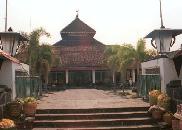
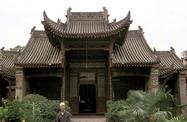
SAHM pada muqaddimahnya menyentuh tentang mentaliti pendakwah-pendakwah Islam sepanjang zaman.Beliau memberikan contoh binaan-binaan masjid yang dibina ketika zaman permulaan dakwah Islam. Masjid-masjid di Jawa, China, Balkan bahkan di Melaka mempunyai identiti yang unik.Mengapa?Kerana semua masjid-masjid berkenaan seperti Masjid Demak dan Masjid Agung Xi'An di China mempunyai identiti tempatan. Masjid Demak misalnya sarat dengan seni binaan Jawa zaman Majapahit.

Di Xi'An pula, masjidnya tidak ubah seperti pagoda!Masjid-masjid yang dibina ini tidak punya kubah-kubah bulat mahupun menara yang tinggi-tinggi seperti di mana-mana negara Arab.Apa yang cuba disampaikan oleh SAHM ialah pendakwah-pendakwah Islam pada zaman dahulu sebenarnya sangat memahami pemikiran, budaya,adat dan identiti penduduk tempatan.Kedatangan mereka bukanlah untuk mengubah identiti masyarakat setempat secara radikal.Di Jawa misalnya, kebudayaan mereka masih tebal dengan animisme dan kepercayaan Hindu.Islah dan dakwah mahupun tajdid bukanlah proses yang radikal ataupun tergesa-gesa.Bahkan pendakwah-pendakwah dahulu seperti Wali Songo di kepulauan Jawa begitu memahami uslub dakwah yang diwarisi daripada Rasulullah SAW yang sensitif dengan kefahaman masyarakat setempat. Di kalangan Wali Songo misalnya, mereka sendiri menggunakan nama baru bila berhadapan dengan masyarakat, meskipun nama asal mereka rata-ratanya dalam bahasa Arab.Sunan Ampel misalnya bernama Raden Rahmat. Penggunaan nama Jawa beliau adalah untuk menunjukkan kebersamaan beliau dengan masyarakat setempat, satu methodologi yang cukup berkesan dalam lapangan dakwah.Masjid Demak yang dibina oleh Wali Songo ini misalnya mempunyai senibina Jawa yang sama dengan senibina tempatan pada zaman tersebut.Secara tidak langsung, method dakwah yang digunakan oleh Wali Songo ini mendekatkan hati penduduk tempatan dengan mereka.Adat-adat mereka yang tidak bercanggah dengan Islam tidak pernah disentuh.Malahan jika ada yang baik ia akan diteruskan tanpa halangan.Contoh terdekat ialah wayang kulit yang asalnya mempunyai boneka-boneka menyerupai manusia.Kisah-kisah yang diceritakan oleh tukang-tukang karut biasanya berkisar tentang epik Ramayana dan Mahabrata Hindu.Wayang kulit meruapakan salah satu sumber hiburan masyarakat ketika itu.Oleh itu, adalah tidak bijak jika Wali Songo mengambil pendekatan untuk membid'ahkan, mensyirikkan ataupun melabelkan budaya sebegini dengan label yang keras-keras sehingga menjauhkan manusia daripada Islam.Sebaliknya, para pendakwah ini mengubah bentuk persembahan wayang kulit.Karektor dalam wayang kulit 'dicacatkan' sedikit supaya tidak menyerupai manusia sempurna dan plot penceritaannya digubah supaya tidak lagi berkiblatkan kandungan kitab-kitab epik Hindu.Ini antara kebijaksaan dakwah yang seharusnya dicontohi.

SAHM turut membandingkan sikap dan approach dakwah sebegini dengan sesetengah pendakwah yang ada sekarang.Menurut beliau, ramai pendakwah terutama di dunia Barat ini kurang memahami aspirasi dan kebudayaan penduduk setempat.Lebih malang lagi terdapat segolongan daripada mereka yang mempunyai kefahaman yang kabur tentang konsep bid'ah dan sebagainya.Hasilnya, mereka terlalu cepat menghukum amalan-amalan tertentu masyarakat yang sebenarnya boleh diterima dalam Islam.Tidak kurang juga golongan yang mendakwa mereka sebagai pendokong Sunnah dan pembawa aspirasi Golongan Salaf-as-Soleh.Tetapi berbahasa Inggeris pun masih gagal meskipun sudah tinggal bertahun-tahun di sini. Apa yang terbentuk ialah satu komuniti yang tidak pernah melakukan reach out terhadap non-Muslim yang berpotensi untuk menerima Islam.Orang Islam yang berhijrah ke UK, kekal dengan kefahaman dan budaya mereka lantas membina tembok besar daripada masyarakat setempat.Tiada usaha dakwah dan tiada kesungguhan untuk menyampaikan mesej Islam.Yang tinggal cumalah pandangan hina dan negatif mereka terhadap non-Muslim di UK atau Ireland.

Perkara sebegini tidak seharusnya berlaku.Komuniti Islam tidak kira samada yang menetap atau bermukim di benua ini untuk bekerja ataupun belajar punya tanggungjawab untuk menyampaikan risalah suci sekadar kemampuan mereka. Mengambil posisi dalam politik bukanlah agenda utama umat Islam di Eropah buat masa sekarang.Umat Islam di sini lebih memerlukan usaha dakwah dan pendidikan yang sistematik dari sumber-sumber yang sahih. Bukan daripada golongan pelampau ataupun liberal.

Dalam masa yang sama SAHM menyatakan kekesalan terhadap reaksi umat Islam yang keterlaluan terhadap sesuatu isu.Contohnya dalam isu karikatur Denmark dan kenyataan Pope mengenai Islam.Tunjuk perasaan atau demonstrasi menurut beliau, bukanlah cara yang paling baik kerana masyarakat bukan Islam di sini tidak begitu ambil pusing tentang mana-mana demonstrasi.Pendidikan dan peningkatan kefahaman Islam adalah satu-satunya cara untuk mengubah persepsi masyarakat bukan Islam terhadap agama kita.

Beberapa jam bersama beliau bagaikan beberapa minit.Aneh sekali, seorang yang dilahirkan Muslim seperti aku kini belajar dengan seorang British yang dahulunya beragama Kristian. Belajar tentang Islam dan dakwah.Yang lebih aneh, belajar tentang kebudayaan dan sejarah Nusantara daripada seorang mat saleh seperti Sidi Abdal Hakim Murad!

Friday, November 17, 2006

Sidi Abdal Hakim Murad


At last, he is back from Istanbul!
Here is his programme in Dublin:


Venue:Walton Theatre, Trinity College Dublin
Date: 18th November 2006
Time:5-7 pm


Abdal Hakim Murad graduated from Cambridge University with a double-first in Arabic in 1983. He then lived in Cairo for three years, studying Islam under traditional teachers at Al-Azhar, one of the oldest universities in the world. He went on to reside for three years in Jeddah, where he administered a commercial translation office and maintained close contact with Habib Ahmad Mashhur al-Haddad and other ulama from Hadramaut, Yemen.

In 1989, Shaikh Abdal Hakim returned to England and spent two years at the University of London learning Turkish and Farsi. Since 1992 he has been a doctoral student at Oxford University, specializing in the religious life of the early Ottoman Empire. He is currently Secretary of the Muslim Academic Trust (London) and Director of the Sunna Project at the Centre of Middle Eastern Studies at Cambridge University, which issues the first-ever scholarly Arabic editions of the major Hadith collections.

Shaikh Abdal Hakim is the translator of a number of works, including two volumes from Imam al-Ghazali's Ihya Ulum al-Din. He gives durus and halaqas from time to time and taught the works of Imam al-Ghazali at the Winter 1995 Deen Intensive Program in New Haven, CT. He appears frequently on BBC Radio and writes occasionally for a number of publications, including The Independent; Q-News International, Britain's premier Muslim Magazine; and Seasons, the semiacademic journal of Zaytuna Institute.

Saturday, November 11, 2006

Naguib Mahfouz


“My talk…comes in a language unknown to many of you but [that language] is the real winner of the prize. It is, therefore, appropriate that its melodies should float for the first time into your oasis of culture and civilization. I have great hopes that this will not be the last time, either, and that literary writers of my nation will have the pleasure of sitting with full merit among your international writers, who have spread the fragrance of joy and wisdom in this grief-ridden world of ours.

“I was told by a foreign correspondent in Cairo that the moment my name was mentioned in connection with the prize, silence fell, and many wondered who I was. Permit me, then, to present myself in as objective a manner as is humanly possible. I am the son of two civilizations that at a certain age in history formed a happy marriage. The first of these, 7000 years old, is the pharaonic civilization; the second, 1400 years old, is the Islamic one…. As for Islamic civilization, I will not talk about its call for the establishment of a union of all humankind under the guardianship of the Creator, based on freedom, equality and forgiveness….

“I will, instead, introduce that civilization in a moving, dramatic situation summarizing one of its most conspicuous traits. In one victorious battle against Byzantium it gave back its prisoners of war in return for a number of books of the ancient Greek heritage in philosophy, medicine and mathematics. This is a testimony of value for the human spirit in its demand for knowledge, even though the demander was a believer in God and what was demanded was the fruit of a pagan civilization.

“Ladies and Gentlemen, you may be wondering: This man coming from the Third World, how did he find the peace of mind to write stories? … Fortunately, art is generous and sympathetic. In the same way that it dwells with the happy ones it does not desert the wretched. It offers both alike the convenient means for expressing what swells up in their bosom.

“In this decisive moment in the history of civilization it is inconceivable and unacceptable that the moans of Mankind should die out in the void. There is no doubt that Mankind has at last come of age, and our era carries the expectations of entente…. The human mind now assumes the task of eliminating all causes of destruction and annihilation. And just as scientists exert themselves to cleanse the environment of industrial pollution, intellectuals ought to exert themselves to cleanse humanity of moral pollution. It is both our right and our duty to demand of the great leaders in the civilized countries, as well as of their economists, to effect a real leap that would place them in the focus of the age.

“In the olden times every leader worked for the good of his own nation alone. The others were considered adversaries, or subjects of exploitation…. Today, this view needs to be changed from its very source. Today the greatness of a civilized leader ought to be measured by the universality of his vision and his sense of responsibility toward all humankind. The developed world and the Third World are but one family. Each human being bears responsibility toward it to the degree that he has obtained knowledge, wisdom and civilization. I would not be exceeding the limits of my duty if I told [the leaders] in the name of the Third World: Be not spectators to our miseries…. We have had enough of words. Now is the time for action.”

Read the memoir of Naguib Mahfouz here

Thursday, November 02, 2006

Deen Intensive II Audio

After few months, those who were 'crippled' from attending DID II can now download and listen to the lecture by our teacher, Ustaz Mohammad Fauzi Hadrami. The lectures available are on Syafi'i Fiqh, Tasawwuf and Islamic Parenting.The corpora used were:

1)Tarbiyatus Shibyan by Imam al-Ramli
2)Wasiyya of Imam Haddad by Imam Habib Abdallah 'Alawi al-Haddad
3)Safinah Najah by Shaykh Abdullah bin Saad bin Sumair al - Hadrami

Click here to download and listen

Ramadan in Istanbul


Sidi Abdal Hakim Murad once again wrote about his experience in Istanbul during Ramadan. Ramadan has left but the memories were commemorated in this wonderful piece.I just couldn't wait for my next ziarah to Istanbul.Ahmet, Sekdas and Celaladdin are waiting for me in Turkey.May Allah bless my trip in December and make me pass my exams!!

"Sabah prayer at the mosque of Eyüp is the most popular worship experience in the city; but arrive even at two in the morning on the 27th, and you will find it hard to squeeze beyond the leather curtains into the mosque interior. Here, more than anywhere else in the City, the Turks are feasting, and feasting again, on the Qur’an."


"Like a benign watchful presence, behind the five-hundred year old plane tree planted by the Conqueror’s own hand in the mosque court, lies the grave of the Companion Abu Ayyub al-Ansari, which, of the hundreds of active pilgrimage sites in the City, remains the greatest magnet for visitors. The space is ablaze with a turquoise glow, supplied by the Iznik tiles, which are among the most precious ceramic masterpieces in the world. Close beside it is the I‘tikaf chamber built for Princess Adile, who spent her Ramadans here a century ago, before being buried among the royal tombs nearby. Outside lie the graves of warlike pashas, sayyids, and ulema, including Ebussuud Efendi, the great
tafsir scholar, and reviver of the Shari‘a in the time of Sultan Suleyman. Here too are the sainted ladies, and then great madrasas and tekkes, beyond the stone stairs where a new Sultan, visiting the mosque for his coronation, would descend from his horse, to walk the remainder of Enthronement Road humbly on foot. In his palace, the Sultan alone could ride; at Eyüp, he too was required to dismount."

"As Urdu-speakers well know, prayers in a language where everything happens before the verb have tremendous dramatic impact: ‘And our sins, in this and earlier months, against You and other members of our nation, Our Lord, forgive! And the affairs of the Muslims here and in the world, Our Lord, set right! And to the soul of Sultan Ahmet, Our Lord, grant rest!’"

Read the article here.

Friday, October 27, 2006

Masa iftar dan majlis tadarrus Quran anjuran PPIMI lepas, aku sempat berbual dengan seorang 'tetamu kehormat' majlis itu.Namanya Father Kieran yang tinggal di Leeson Park berdekatan Malaysia Hall. Memandangkan budak-budak Dublin lain sedang sibuk menghadap nasi tandoori Pakcik Yusof, aku cuba sedaya upaya untuk melayan pertanyaan-pertanyaan Father Kieran. Kami sama-sama mempunyai minat mendalam terhadap voluntary work ataupun relief work terutamanya di kawasan pedalaman. Rupa-rupanya Father Kieran sudah lama berkelana untuk missionary work beliau di Afrika.Bila ditanya;

"How long have you been in Africa for missionary work there?"

"Ahh... not that long. Just couple of years to help the needy in Nigeria.There's plenty of Muslims out there.They are all nice."

"I see.So, how long have you been there?I guess 2, 3 years probably?"

"Hmmm...about 10 years"

"Ten years????"

SENYAP

Nak dihantar berkhidmat ke kawasan pedalaman di Malaysia oleh Kementerian Kesihatan pun, ramai antara kita yang merungut.Inikan pula kerja-kerja dakwah.Padanlah agama Kristian berkembang pesat di Afrika. Subur kerana penganut-penganutnya yang jujur dan komited terhadap seruan agama mereka.Tiada secalit pun sikap materialistik.Alangkah baiknya kalau sikap altruism begini tertanam pada jiwa anak-anak muda dan para daie kita.

Sunday, October 22, 2006

Letter to Benedict XVI


"Show me just what Muhammad brought that was new and there you will find things only evil and inhuman, such as his command to spread by the sword the faith he preached."

Byzantine Emporer Manuel II

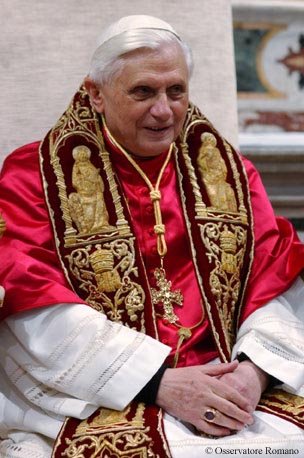
This is some of the remarks of Pope during his lecture at the University of Regensburg on Sept. 12, 2006. In a spirit of goodwill, 38 Muslims scholars from around the globe joined to send a letter to respond to speech made by His Holiness Pope Benedict. Among scholars that signed the letter are, Shaykh Ali Jumu‘ah (the Grand Mufti of Egypt), Shakyh Abdullah bin Bayyah (former Vice President of Mauritania, and leading religious scholar), and Shaykh Sa‘id Ramadan Al-Buti (from Syria), in addition to the Grand Muftis of Russia, Bosnia, Croatia, Kosovo, Slovenia, Istanbul, Uzbekistan, and Oman, as well as leading figures from the Shi‘a community such as Ayatollah Muhammad Ali Taskhiri of Iran. The letter was also signed by HRH Prince Ghazi bin Muhammad bin Talal of Jordan and by Muslim scholars in the West such as Shaykh Hamza Yusuf from California, Professor Seyyed Hossein Nasr of George Washington University in Washington, D.C., and Professor Tim Winter of the University of Cambridge.

The letter tackles the main substantive issues raised in his treatment of a debate between the medieval Emperor Manuel II Paleologus and an “educated Persian”, including reason and faith; forced conversion; “jihad” vs. “holy war”; and the relationship between Christianity and Islam.The letter is now published by Islamica Magazine. Read here.

Saturday, October 14, 2006

Risalah Mu'awanah:Imam Haddad on Fasting


Increase your good works, especially in Ramadan, for the reward of a supererogatory act performed during it equals that of an obligatory act performed at any other time. Ramadan is also a time when good works are rendered easy and one has much more energy for them than during any other month. This is because the soul, lazy when it: comes to good works, is then imprisoned by hunger and thirst, the devils who hinder it are shackled, the gates of the Fire are shut, the gates of the Garden are open, and the herald calls every night at God's command: 'O you who wish for goodness, hasten! And O you who wish for evil, halt!'

You should work only for the hereafter in this noble month, and embark on something worldly only when absolutely necessary. Arrange your life before Ramadan in a manner which will render you free for worship when it arrives. Be intent on devotions and approach God more surely, especially during the last ten days. If you are able not to leave the mosque, except when strictly necessary, during those last ten days then do so. Be careful to perform the Tarawih prayers during every Ramadan night. In some places it is nowadays the custom to make them so short that sometimes some of the obligatory elements of the prayer are omitted, let alone the sunnas. It is well known that our predecessors read the whole Qur'an during this prayer, reciting a part each night so as to complete it on one of the last nights of the month. If you are able to follow suit then this is a great gain; if you are not, then the least that you can do is to observe the obligatory elements of the prayer and its proprieties.

Watch carefully for the Night of Destiny [Laylat'ul-Qadr], which is better than a thousand months. It is the blessed night in which all affairs are wisely decided. The one to whom it is unveiled sees the blazing lights, the open doors of heaven, and the angels ascending and descending, and may witness the whole of creation prostrating before God, its Creator.

Most scholars are of the opinion that it is in the last ten nights of Ramadan, and is more likely to fall in the odd numbered ones. A certain gnostic witnessed it on the night of the seventeenth, and this was also the opinion of al-Hasan al-Basri. Some scholars have said that it is the first night of Ramadan, and a number of great scholars have said that it is not fixed but shifts its position each Ramadan. They have said that the secret wisdom underlying this is that the believer should devote himself completely to God during every night of this month in the hope of coinciding with that night which has been kept obscure from him. And God knows best.

Hasten to break your fast as soon as you are certain that the sun has set. Delay suhur long as you do not fear the break of dawn. Feed those who fast at the time when they break it, even if with some dates or a draught of water, for the one who feeds another at the time of breaking the fast receives as much reward as he without this diminishing the other's reward in any way. Strive never to break your fast nor to feed anyone else at such a time except with lawful food. Do not eat much, take whatever lawful food is present ' and do not prefer that which is tasty, for the purpose of fasting is to subdue one's lustful appetite, and eating a large quantity of delicious food will on the contrary arouse and strengthen it.

Fast on the days on which the Law encourages you to fast, such as the day of Arafat for those who are not participating n the pilgrimage, the ninth and tenth [‘Ashura] of Muharram, and the six days of Shawwal, starting with the second day of the Feast, for this is the more effective discipline for the soul. Fast three days in each month, for these equal a perpetual fast. It is better if these are the White Days, for the Prophet, may blessings and peace be upon him, never omitted to fast them whether he was at home or traveling. Fast often, especially in times of special merit such as the Inviolable Months, and noble days such as Mondays and Thursdays. Know that fasting is the pillar of discipline and the basis of striving. It has been said that fasting constitutes half of fortitude. The Messenger of God, may blessings and peace be upon him, said: 'God the Exalted has said: "All good deeds of the son of Adam are multiplied ten to seven hundredfold, except fasting, for it is Mine, and I shall reward a man for it, for he has left his appetite, his food and drink for My sake!"' 'The one who fasts has two joys, one when breaking his fast, the other when meeting his Lord.' And; 'The odour of the fasting man’s mouth is more fragrant to God than that of musk.' God says the truth and He guides to the way. [XXXIII:4]

Taken from: Al-Haddad, Abdallah Ibn Alawi. The Book of Assistance. 2st ed. Trans. Mostafa Al-Badawi. London: The Quilliam Press, 1998.

PUISI 2006

Tahun ini tak berkesempatan untuk ber'PUISI' memandangkan saya akan berziarah ke bumi Bani Osman Disember ini.Ini promo PUISI tahun ini.

Wednesday, July 26, 2006

... Rise from under the rubble
Like a flower of almond in April.
Get over your sorrows,
For revolution grows in the womb of grief!
Rise in honor of the forests.
Rise in honor of the rivers.
Rise in honor of humankind.
Rise, O Beirut!
(Nizar Qabbani on 'Beirut: The Queen of the World')

Sunday, June 18, 2006

Photobucket - Video and Image Hosting


Abdassamad Clarke is the translator of a number of classical works,
including "The History of the Khalifahs Who Took the Right Way", based
on Imam Jalaluddin As-Suyuti's "Tārķkh Al-Khulafā". It is a classical
text presenting some of the most authentic traditions regarding the
first four caliphs of Islam, the integrity and wisdom they displayed
in their governance, and their contributions to that body of practice
which is known to us as the Sunnah. Other books translated or written
by Abdassamad include, "A Madinan View on the Sunnah", "The Clear
Victory", "Year of the Elephant", "Drops from an Ocean" and Ibn Abi
Zayd al-Qayrawāni's manual on Maliki fiqh "Kitāb al-Jāmi'".

Sunday, June 11, 2006

A Gift For the Sincere

Habib Abdullah bin Hussain bin Tahir al'Alawi is a great Sufi and Saint from Hadramawt Valley.For centuries, Ihya' Ulumuddin is crowned as the 'king' of all tasawwuf texts.However, the work of Hujjatul Islam Imam Ghazali is considered quite lengthy.Later generation of scholars, like Imam Habib Abdullah bin Alawi al-Haddad took the effort to compile the knowledge of Ihya into a simpler text.The Silsilah of Imam Haddad is a 10-volume set of works of Imam Haddad that were considered as the summary of Ihya.The famous Nasaih Diniyya is included in the Silsilah.

Imam Haddad was not the only one who had laid effort to summarize the knowledge of Ihya. Other scholar like Abdul Wahab Sha'rani (d:973H/2565M) from Qalqanshada, Egypt who was a Shafi'i scholar and prolific writer in Sufism had written a few set of works on tasawwuf. His style is nonetheless the same with Imam Ghazali in the sense of showing the unity between law (fiqh) and the way (tariqah). I used to hear that Ustaz Fauzi mentioned that his works, just like Imam Haddad are the summary of Ihya's content. Among Abdul Wahab Sha'rani's works that still remained popular today is Lata'if al-Minan wa al-Akhlaq (Subtleties of Gifts and Character) and Lawaqih al-Anwar al-Qudsiyya (The Fecundating Sacred Illimunations).

However, the work of Habib Abdullah bin Hussain bin Tahir al-'Alawi is even more mesmerizing.He concluded the whole theme of Ihya' Ulumuddin into poetry. The nazam were written by chapters and all of them are the abridgement of Ghazali's Ihya.

And today, we had the opportunity to learn the most important chapter of all from Hidayatul Siddiq of Habib Abdullah bin Tahir.The chapter on preserving the heart.Delivered by the most qualified teacher who used to sit with various scholars and saints. May Allah benefit us through Sidi Abdul Aziz Ahmed!

So discipline heart, O my brother!
By leaving every transgression

And attribute it to hunger
And minimal appeasement

Minimal speech
And abandonment of sleep

And rejection of lusts
Neglect and dissension

And taking care of the senses
Of hearing and touch

And live with presence of mind
And remembrance and gratitude

Until you reach annihilation
And you see no second one (Al-Mawt)!